Lernly: Finalist Spotlight
 Team Member Laura Werner Marketing Coordinator & Digital Marketing Strategist Social Impact Award International laura.werner@socialimpactaward.net
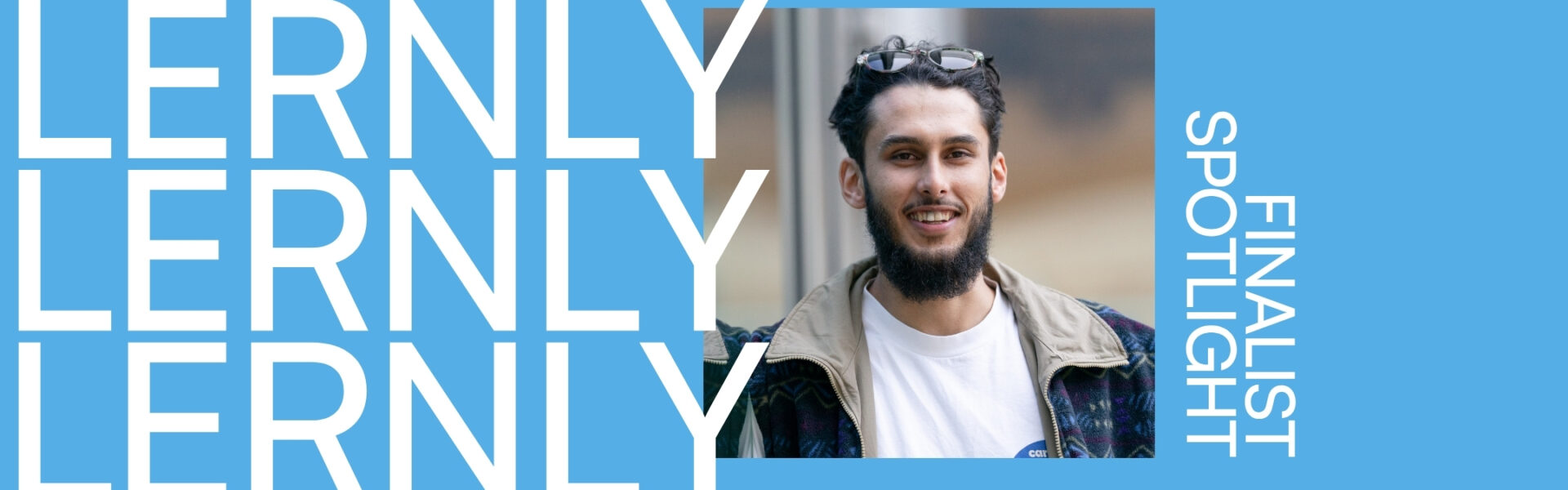
A conversation with Musa Müller, CEO & founder of Lernly - a game based platform for children between six and ten years old who are learning German as a second language.
Tell us about your idea – what, how, why?
The children enter a game world and learn German while they play. Characters guide them, and those characters move their lips in sync with what they say, so a child can see how a word is formed and not just hear it. Along the way, the child is supported in their first language. That support fades as their German improves.
While they play, we measure. A competency profile builds up for every child. Not points and badges, but what the child can actually do and where the gaps are. The teacher sees this in a dashboard. No extra testing, no extra workload.
Why: teachers often sit in front of five different German levels in one classroom, with no time and no data. They are working on instinct. We want to give them something solid to work with, and give the children a way in that does not feel like a test.
What motivated you to start your own project/company?
A conversation in March 2025. A friend of mine teaches physics and maths at a secondary school in Vienna. He told me his students did not understand him. Not because the content was too difficult, but because their German was not strong enough.
That stayed with me on the whole drive back to Graz. In the middle of the night I called my best friend Mohamed and said: we have to teach these kids German, and we have to do it through play.
Mohamed sat in a DaZ (German as a second language) class himself as a child. We grew up together. So it was clear from the first minute that if we build this, it has to actually reach the children, not just look good to adults.
A month later we applied to Gründungsgarage in Graz. That is when we understood how big the challenge in Austria really is.
How did your Impact Journey begin?
Honestly, it began with that phone call.
What came after was a lot of listening. We talked to teachers, principals and the Bildungsdirektion. I am writing my bachelor’s thesis on how Austrian schools adopt digital tools, which means I interview the same people twice. Once as a student, once as a founder. That keeps me honest.
When we started, we thought we understood the problem, and we thought we knew what to build. We were wrong on both counts. It was only when we applied to Gründungsgarage and started talking to people inside the system that we saw how big the issue actually is in Austria. And the product changed as well. We built what we thought was good, then teachers told us what they actually needed. The competency dashboard exists because of those conversations, not because we planned it.
Around 100 children and over 30 teachers have now tested our first prototype. Every round of feedback has changed something.
What are you most looking forward to / most excited about so far?
What I am really waiting for is the pilot. Three to four Styrian primary schools are planned. I want to sit in the back of a classroom and watch children use this, and find out where it breaks. Until then, a lot of what we believe is still just belief.
If you had all the resources, what would you change in the world?
I would take language out of the equation.
A six-year-old does not choose which language is spoken at home. But that one fact quietly shapes everything that follows. Whether they can follow the lesson. Whether they put their hand up. Which school they end up in. Nobody ever makes a decision about it. It just accumulates.
I would want every child to be able to follow what is happening in their classroom. That is the whole thing. Everything else follows from it.
If your project were an animal, which one would it be and why?
A crow. I picked that up in a creativity programme at Uni Graz (Transatlantic Entrepreneurship Academy). The motto was „be like a crow“. Crows are curious, they collect things, and they solve problems with whatever happens to be lying around.
That is fairly close to how we work. We combine pedagogy, game design and technology, and we use what already exists instead of building everything from scratch. Crows are also badly underestimated, which I will happily take.
What has been the biggest challenge so far?
Saying no.
I have too many ideas, and every teacher we talk to gives me three more. My instinct is to build all of them, and then nothing gets finished properly. I have had to learn to write things down and let them sit in a backlog instead of a roadmap.
The other one is structural. In a school, the person who chooses the tool, the person who uses it and the person who pays for it are three different people. Nobody tells you that at the beginning. You find out by getting it wrong.